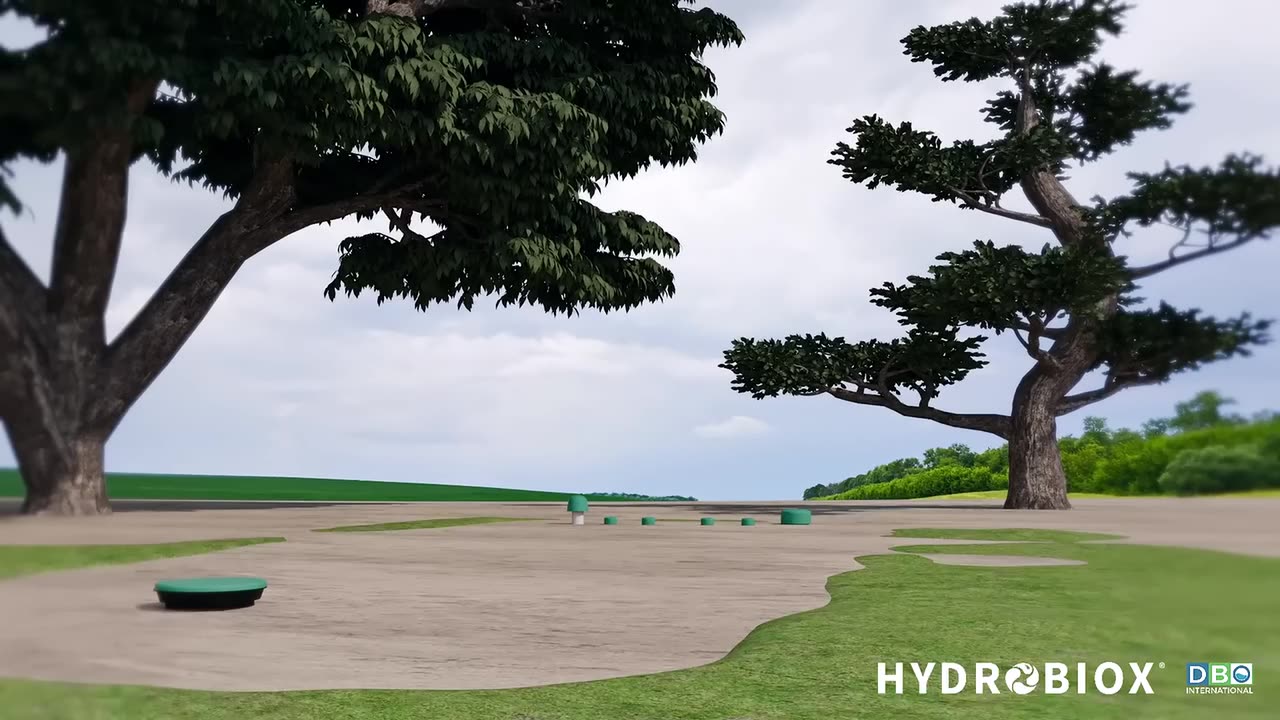


Domestic wastewater reaches the pre-treatment unit
The pre-treatment stage, where solids are separated, provides a balanced inflow to the biological treatment line.
Compact, new-generation biological wastewater treatment
Compact, new-generation biological wastewater treatmentHydroBioX is a compact wastewater treatment solution developed for homes and residential projects without sewerage infrastructure. Born out of DBO International's many years of field experience, the system combines biological treatment performance with a smaller installation footprint and a simplified application structure.
Technology of DBO International (Canada) · Türkiye distributor IWA Mühendislik ve Teknoloji A.Ş.

Overview
HydroBioX was developed to treat domestic wastewater by making use of natural biological processes. Thanks to its passive operating principle, the treatment process requires no electric motors, no complex mechanical parts and no continuous use of chemicals.
Its compact structure is a significant advantage, particularly for detached homes, small settlements and housing projects where usable space is limited. When considered together with additional treatment and disinfection stages appropriate to the project and the applicable regulations, the treated water can be recovered for irrigation and other suitable uses.
DBO International states that HydroBioX is a new-generation solution that uses less filter sand than traditional System O)) structures, is easier to install and can be more economical in some projects.
HydroBioX is a technology of DBO International (Canada); it is represented in Türkiye by IWA Mühendislik ve Teknoloji A.Ş. The entire process from system selection to commissioning is carried out by our own engineering team.
Operating Principle
The domestic wastewater reaching HydroBioX is treated with the help of the biological ecosystem that develops inside the system. Microorganisms help break down the organic pollutants in the wastewater. The process is designed to make use of natural biological mechanisms instead of electrical aeration equipment and continuous chemical dosing.
The pre-treatment stage, where solids are separated, provides a balanced inflow to the biological treatment line.
Water leaving pre-treatment is distributed by gravity through the system's filter medium; no moving equipment such as pumps or fans is required.
The aerobic and anaerobic microorganism layer that develops on the filter surface helps break down organic pollutants biologically.
The discharge method and treatment level are determined according to the ground conditions of the region, the usage capacity and the relevant regulations.
When the necessary advanced treatment or disinfection is applied, the treated water can be used in the areas permitted by regulation.
Attributes
The attributes below stand out because of their direct effect on the system's operating load, energy needs and environmental impact.
Treatment is carried out not by externally powered equipment but by the biological process that develops inside the system.
No electrical connection is required for the treatment process; it can also be considered for off-grid settlements.
With no moving components such as pumps, fans or control panels, the number of parts that can fail is minimized.
A footprint small enough to be applied on plots where usable space is limited is targeted.
The simplified application structure helps reduce on-site installation time and workload.
The filter medium is designed to be permanent; it is not a consumable that must be replaced periodically.
After suitable advanced treatment and disinfection, treated water can be put back to use in the areas permitted by regulation.
Solution options are planned according to the capacity and space needs of residential-scale projects.
Technical Data
The values below are data publicly declared by the manufacturer of the technology. Project-specific performance targets are determined as a result of technical review.
These stages are added to the project according to the targeted effluent quality and the use scenario.
Reuse
When a suitable treatment level is achieved and the relevant regulations and quality criteria are met, the effluent can be used in the areas below. The use scenario is determined separately for each project.
The reuse goal requires the system to be addressed as early as the design stage. If we discuss from the start where the water will be used, we also size the required treatment stage correctly.

Areas of Use
The topics below are the areas where the system is typically considered. Final suitability is determined after the wastewater characterization, flow rate, space and regulatory conditions are examined.
Application Images
The images below are classified by area of use and belong to this system only.


Project Suitability
The project types below are the situations where the system is typically considered. Final suitability is determined after the flow, wastewater characteristics, space, ground and regulatory conditions have been examined.
Individual buildings that cannot be connected to the central sewerage network
Plots where a large treatment area cannot be allocated because of space constraints
Small housing and eco-settlement projects that grow in phases
Rural projects where the electricity infrastructure is limited or intermittent
Owner-operated buildings that want to keep the operating burden low
Projects planning to use treated water for garden and landscape irrigation
Frequently Asked Questions
If you cannot find the answer to a question, you can send it to us through the project assessment form.
It is a compact treatment solution that works passively and biologically, developed for the on-site treatment of domestic wastewater. It is designed for homes and small settlement projects without sewerage infrastructure.
The treatment process is designed to work passively and requires no electrical aeration equipment. If pumping is required depending on the project, that need is assessed separately from the treatment process.
Both are passive and biological. HydroBioX stands out with its more compact installation area and simplified application structure; System O)) is a solution family proven in the field that can be adapted to different capacities and project types.
It was developed for domestic wastewater. Industrial wastewater requires a separate characterization and design assessment.
The required area is determined by the number of users, daily flow, ground permeability and the chosen discharge method. Once you share your project details we clarify the space requirement together.
The system is designed to reduce the need for continuous maintenance. Even so, periodic checks of the pre-treatment unit and the routine checks stated in the manufacturer's user guide must be carried out.
No. Treated water is not used as drinking water. After suitable advanced treatment and disinfection it can be evaluated for irrigation and similar uses permitted by the applicable regulations.
After the site and capacity assessment the system is selected; procurement, installation, inspection and commissioning are carried out by the IWA engineering team. Installations require qualified engineering design and proper construction.
Project Assessment
Let us review together your project's capacity, the site conditions and how you would like to make use of the treated water.
Once you share the information below, our team assesses the right system and capacity for your project and we start the quotation process together.
Share your need; let our team assess the right engineering approach for your project.